the product launched successfully, attracted investment, and moved into private beta
Back to selected projects
Cluster One
Crypto wallet / Web3 infrastructure
A self-custody wallet designed to make security and advanced crypto actions easier to trust.
I worked on product design for a non-custodial wallet with built-in staking flows, validator selection, security settings, and a web3 app marketplace, helping turn a high-trust product into something clearer to navigate and safer to use.
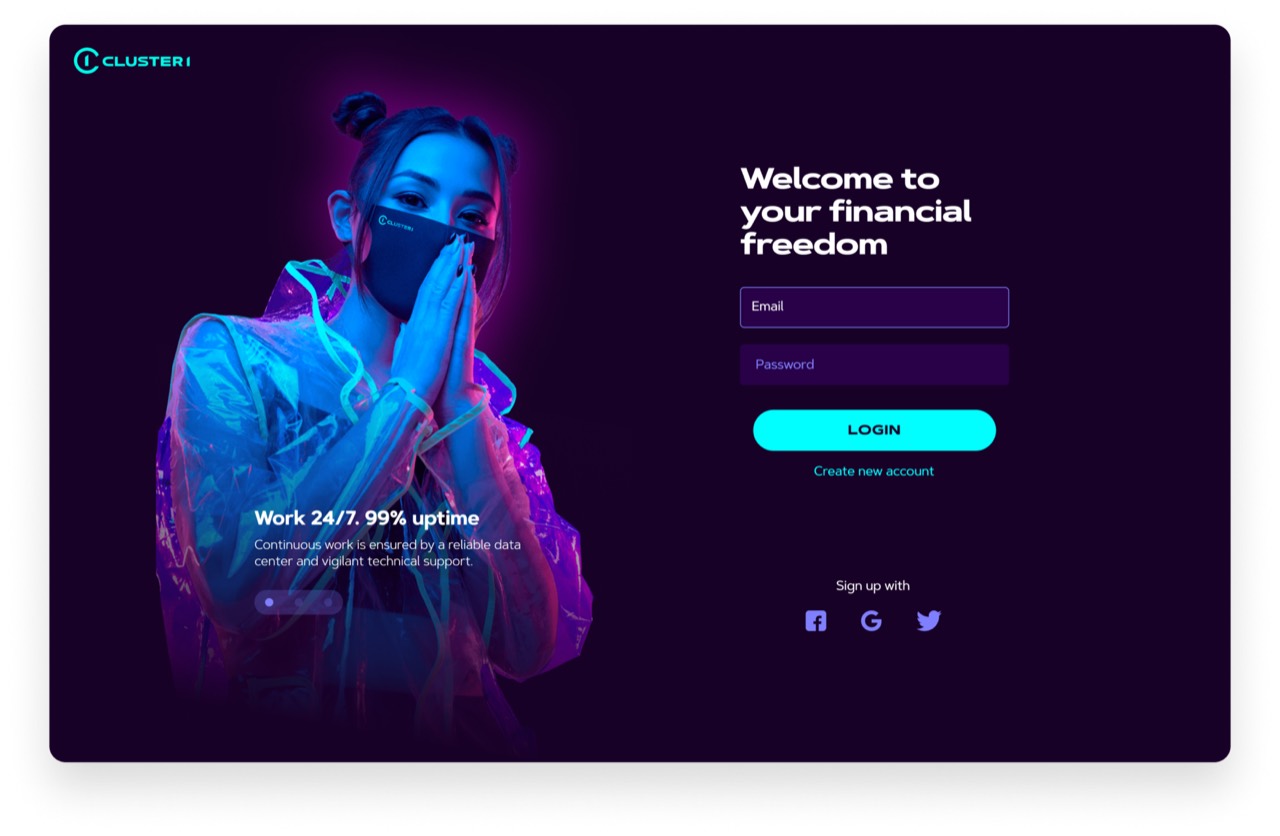
security, portfolio visibility, and staking logic were shaped into one clearer wallet system
01
Overview
A wallet designed to make self-custody, security, and asset actions feel more manageable inside one system.
Cluster One Network is an expandable non-custodial crypto wallet with a built-in marketplace of web3 applications. It allows users to store assets, configure security, view portfolio data, and move into staking-related actions without leaving the product.
Product
A self-custody wallet with security tooling, portfolio visibility, validator selection, staking logic, and embedded access to web3 applications.
Main task
Make a high-trust crypto product easier to understand at the moments where users need to make security-sensitive or financially meaningful decisions.
User mission
Help people store assets securely, manage wallet settings, review portfolio behavior, and choose advanced actions with more confidence.
Product success
Stronger trust in the wallet, clearer access to security flows, and easier entry into validator and staking-related decisions.
02
Why this problem mattered
Trust in a wallet is built before action, not after it.
Product problem
A non-custodial wallet has to explain security, ownership, and advanced actions clearly enough that users can trust the system without depending on external guides or fragmented crypto knowledge.
User problem
Users needed one place to manage assets securely, understand wallet settings, review movement of funds, and evaluate staking opportunities without switching between many tools and sources.
Where it breaks
- Security settings feel high-risk when the logic is not immediately clear
- Seed phrase generation and 2FA setup demand strong trust from the first moments
- Validator choice becomes heavy when comparison logic is spread across many sources
- Portfolio data loses value if it is visible but not easy to interpret
Before users can benefit from advanced wallet functionality, they first need to feel that the system is understandable enough to trust with their assets.
03
Discovery and framing
The work focused on the moments where complexity was reducing confidence instead of supporting capability.
The product had to support very different moments: secure access, portfolio reading, staking decisions, and validator comparison. The framing challenge was not to remove complexity entirely, but to present it in an order that users could actually reason through.
Security entry points such as mnemonic generation and two-factor authentication required the clearest framing in the system.
Portfolio visibility needed to support interpretation, not only display balances, charts, and movement data.
Validator and staking flows had to help users compare options inside the wallet instead of sending them away to research externally.
Prioritized trust-critical moments first
Security-related actions such as seed phrase generation, two-factor authentication, and hidden balance settings carried the highest trust burden and needed the clearest interface framing.
Treated portfolio visibility as decision support
Portfolio screens were not only about showing balances, but about helping users understand movement, distribution, and what to do next.
Brought staking and validator logic closer to the wallet
Instead of leaving users to compare hundreds of validators across external pages, the product had to support that decision inside the system.
Framed advanced functionality as guided capability
The wallet needed to remain powerful, but it could not feel like every screen assumed expert-level crypto knowledge from the user.
Wallet trust flow
Secure access
establish ownership and protection early
Read state
make balances and activity interpretable
Evaluate options
compare staking and validator choices inside the system
Act safely
support advanced actions without breaking trust
04
Key decisions
The work was less about styling crypto screens and more about reducing ambiguity around ownership, security, and action.
Made security controls easier to find and reason through
Features such as mnemonic generation, SMS-based two-factor authentication, and Google Authenticator needed to feel serious, visible, and understandable at the exact moment users were asked to trust them.
Turned portfolio visibility into a clearer interpretation layer
Hiding balance, viewing movement statistics, and reading portfolio state were treated as part of user confidence, not as informational extras that sit outside decision-making.
Brought validator comparison into the product itself
Filters and validator data were surfaced inside the wallet so users could compare options and make staking decisions without leaving the system or stitching together trust from external sources.
05
Final direction
The final direction focused on trust, interpretability, and safer entry into advanced wallet actions.
The interface had to support several layers of product thinking at once: self-custody, security, portfolio interpretation, and decision-heavy actions such as staking and validator selection.
The screens below focus on the moments where clarity matters most in a wallet: configuring protection, understanding portfolio state, and evaluating staking actions without leaving the system to look for extra explanation.
Wallet, security, and staking states presented as one system
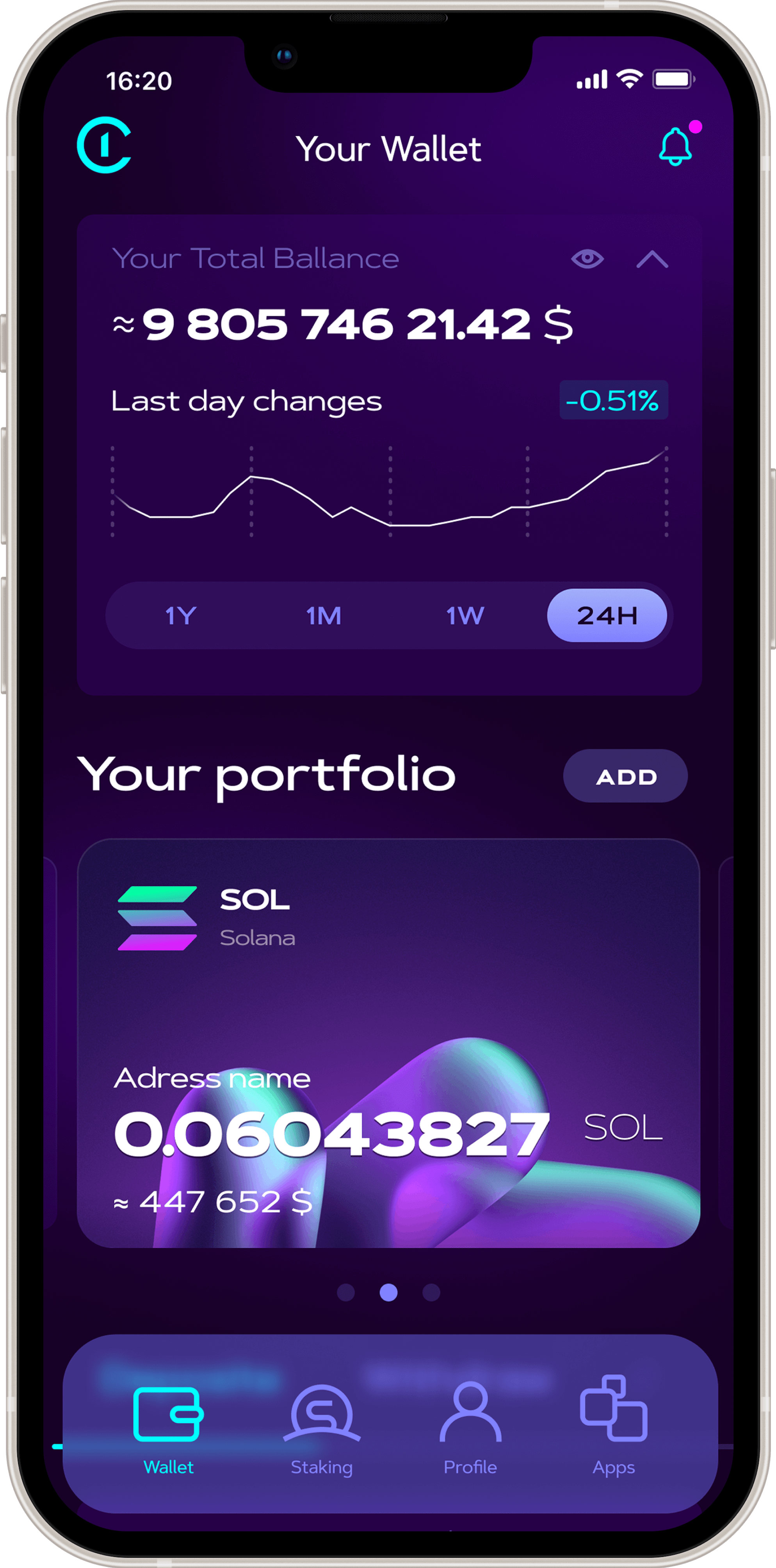
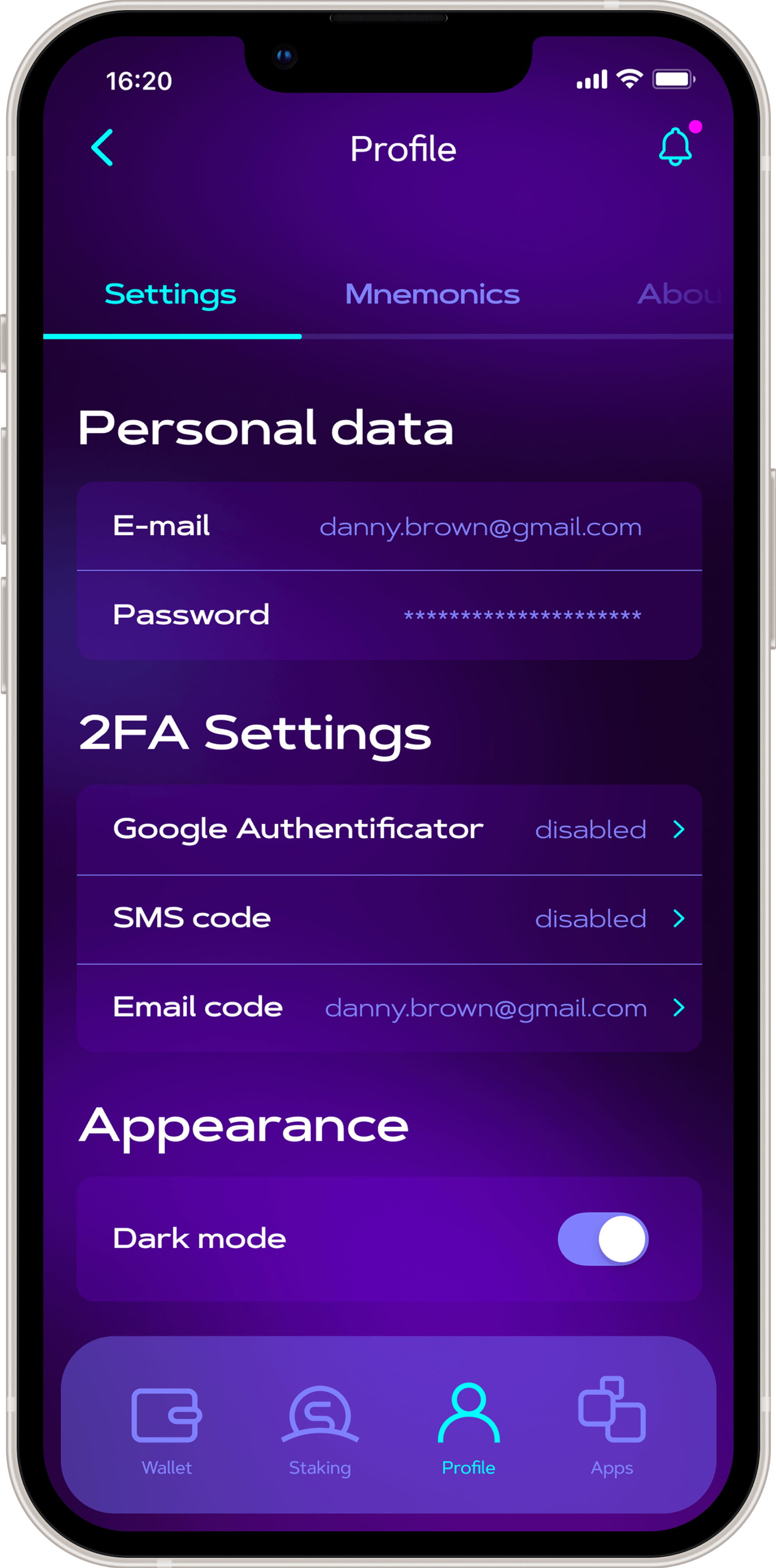
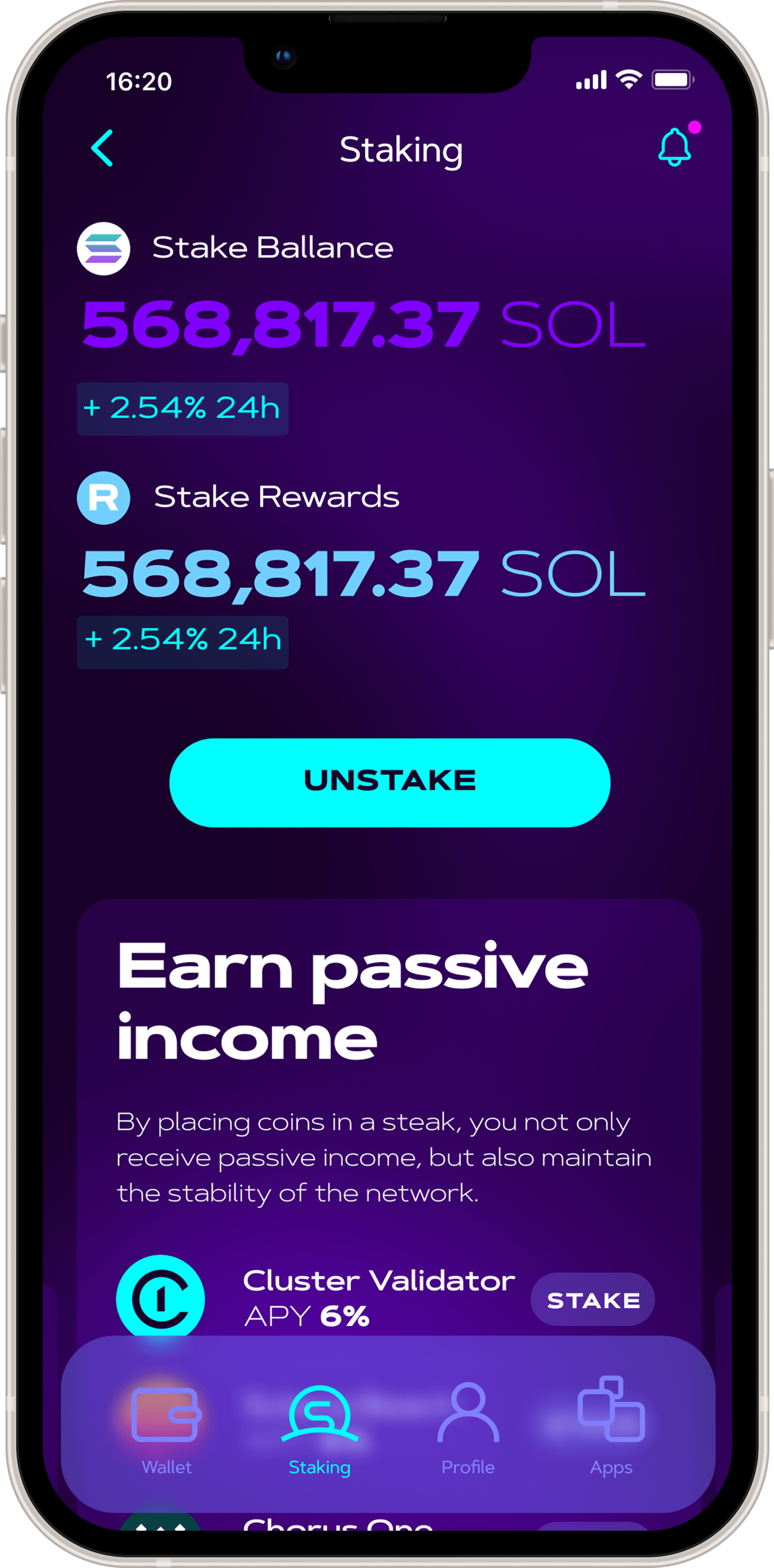
These screens show how portfolio visibility, protection settings, and staking actions were designed to feel part of one coherent wallet system rather than isolated mobile flows that each needed separate interpretation.
Security logic
Establish ownership
make mnemonic and access setup understandable
Protect access
support 2FA and visible security control points
Read the system
show balances, activity, and privacy controls clearly
Act with context
support staking and validator choice inside the product
06
Role and scope
The wallet needed not only clean screens, but a clearer product language for trust-critical actions.
My role
I worked as a UX/UI designer on product flows related to wallet security, portfolio reading, staking logic, and validator navigation.
What I focused on
Security visibility, interpretation of financial state, confidence before action, and keeping advanced crypto functionality understandable inside one system.
Key constraints
The product had to remain serious enough for asset security and powerful enough for advanced use, while still being clear enough for users who were not deeply technical.
Why this was difficult
In wallets like this, every unclear security or staking step can feel expensive. Ambiguity is not a minor UX issue, but a direct threat to user trust.
Results and what
this case demonstrates.
The outcome was not just a cleaner wallet interface, but a more trustworthy product system for security-sensitive and decision-heavy crypto actions.
The product was launched successfully, attracted investment, and moved into a private beta stage.
Security controls, portfolio interpretation, and validator choice were brought closer together inside one clearer system that asked users for less blind trust.
The result was a wallet that asked users for less blind trust before asking them to take meaningful action with their assets.
In products like this, clarity is part of security. If users do not understand the system well enough to trust it, advanced functionality stops being empowering and starts feeling risky.


